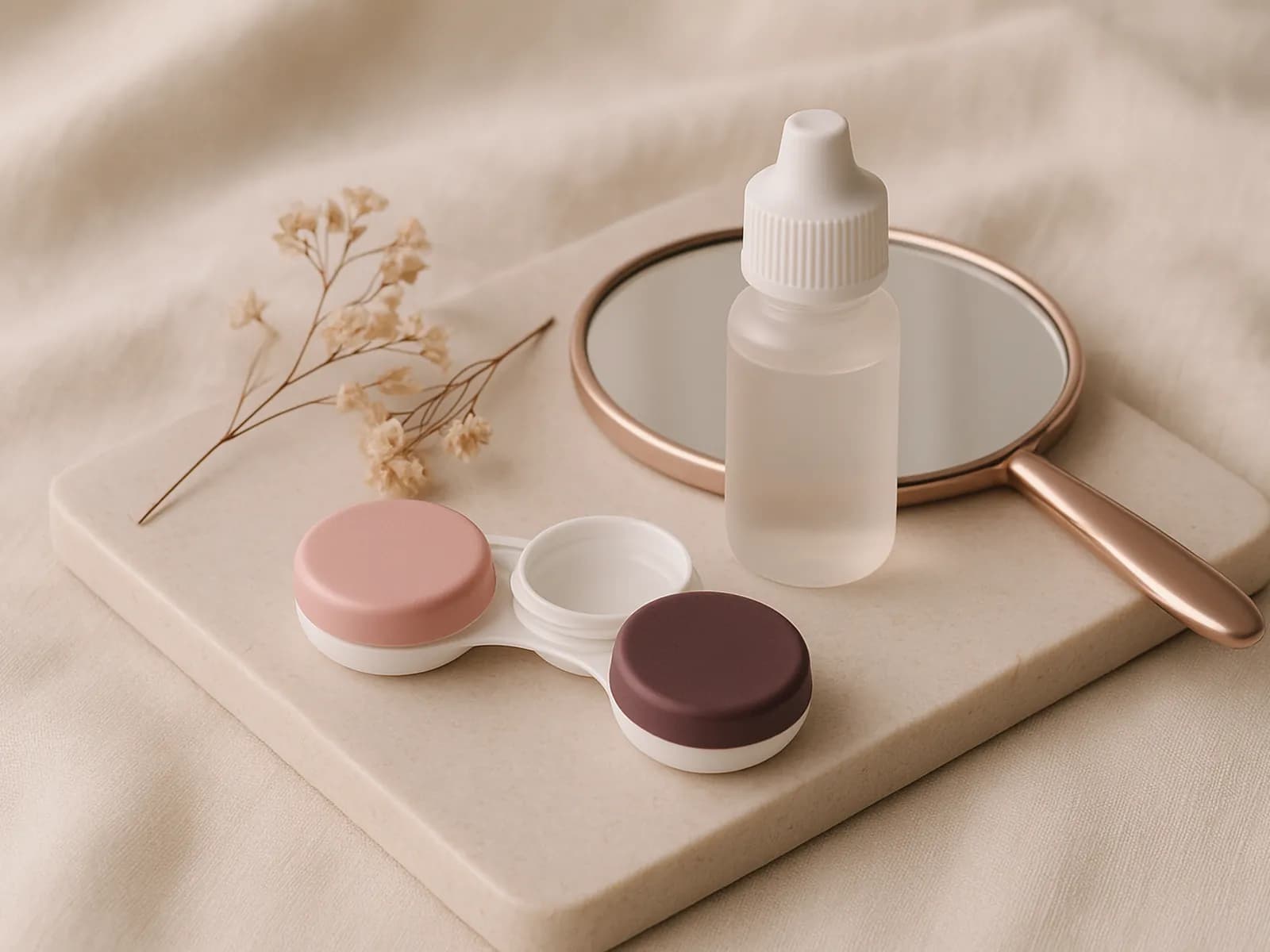
The colored contact lenses that suit you usually follow your skin undertone and natural eye color. Warm undertones tend to pair well with honey or chestnut browns, while colors that are too cool can look disconnected from the face. Before choosing a color, though, there is something more important: contact lenses are medical devices, not just accessories.
This article covers how to choose a lens color, a real analysis from Kira, and how to wear colored lenses safely according to the U.S. Food and Drug Administration (FDA).
How to choose a contact lens color
Start with your skin undertone, since it decides which colors make your face look brighter. If you are not sure, read how to find your skin undertone first. Then consider:
- Warm undertones: honey brown, chestnut brown or olive green usually look natural.
- Dark eyes and hair: natural shades give a soft look, while lighter shades create a more dramatic effect.
- Your plans: natural colors are safer for work and everyday wear. Dramatic colors suit special occasions.
This is aesthetic guidance, based on how Kira reads undertone and color. Personal taste still comes first.
A real contact lens analysis from Kira
Here is Kira’s real answer to the question “which contact lens color suits me?”. Kira reads skin undertone and eye and hair color from a selfie, then recommends colors with previews, plus colors to avoid.
Colored contact lenses are medical devices
According to the FDA, decorative or colored contact lenses are not cosmetics or over-the-counter products. In the United States they are regulated as medical devices and require a prescription, even when they do not correct vision. The reason is simple: lenses are not “one size fits all”. An eye doctor needs to measure each eye so the lenses fit properly.
A poor fit can cause serious eye damage, including scratches on the cornea, corneal infection, conjunctivitis (pink eye), decreased vision and blindness.
How to wear colored contact lenses safely
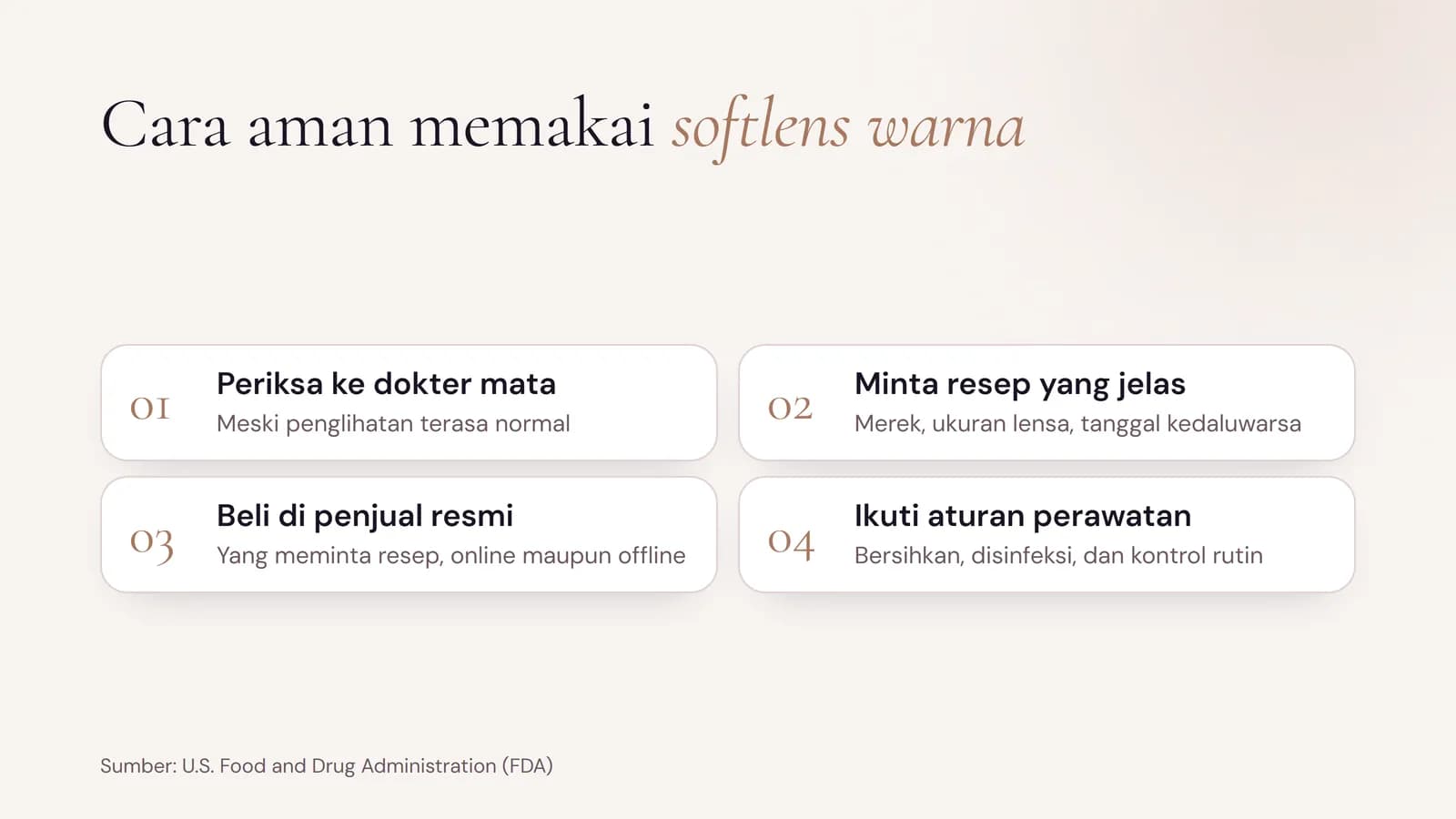
- Get an eye exam, even if your vision feels perfect.
- Get a valid prescription that includes the brand name, lens measurements and an expiration date.
- Buy from a seller that requires a prescription, in person or online.
- Follow all directions for cleaning, disinfecting and wearing the lenses, and see your eye doctor for follow-up exams.
The FDA warns that not using the proper solution to keep lenses clean and moist can lead to infections. Bacterial infections can develop extremely quickly, cause corneal ulcers, and lead to blindness within as little as 24 hours if not treated promptly.
Warning signs to watch for

See an eye doctor right away if you notice redness, eye pain that does not go away after a short time, or decreased vision. These can be signs of an eye infection.
Lens color also works together with your eye makeup. To complete the look, see eyebrow shapes for your face shape.
Ask Kira about lens colors
Send Kira a selfie in natural light on WhatsApp. Kira reads your skin undertone and eye and hair color, then recommends contact lens colors with previews. See the contact lens example.
Frequently asked questions
Which contact lens colors suit tan or medium skin?
Tan and medium skin often has a warm undertone, so colors like honey brown, chestnut brown or olive green usually look natural. Very cool colors such as gray or blue can look high-contrast. Check your own undertone first, since it varies from person to person.
Are colored contact lenses safe?
They can be safe when worn correctly. According to the FDA, colored lenses are medical devices, not cosmetics. Get an eye exam, use a prescription that lists the brand and lens measurements, buy from a legitimate seller, and follow the cleaning and wearing instructions carefully.
What happens if contact lenses do not fit properly?
According to the FDA, a poor fit can cause scratches on the cornea, corneal infection, conjunctivitis, decreased vision and even blindness. That is why an eye doctor needs to measure each eye and check how your eye responds to lenses before you wear them.
When should I see an eye doctor while wearing contacts?
See an eye doctor right away if you have redness, eye pain that does not go away after a short time, or decreased vision. The FDA notes that bacterial infections can develop very quickly and cause blindness within about 24 hours if not treated promptly.
Sources
Facts in this article refer to the sources below.
- Mata
- Softlens
- Undertone
- Makeup