Antibiotics for acne should only be used as prescribed by a doctor. On 3 November 2026, Indonesia's food and drug agency BPOM urged the public to use antibiotics wisely to prevent antimicrobial resistance, which is when bacteria stop responding to medicine. For acne, dermatologists prescribe antibiotics for the shortest time possible and always together with another acne medicine, so the bacteria do not become resistant.
This article sums up BPOM's message, the facts about acne antibiotics from the American Academy of Dermatology (AAD), what to do if your doctor prescribes one, and an example skincare routine from Kira.
What BPOM said about antibiotics
In BPOM's official news release, BPOM head Taruna Ikrar shared the message at the Self-Care AMRun 2026 event in Bali on 1 November, which coincides with World AMR Awareness Week every November. The key points:
- Unwise use of antibiotics can make bacteria resistant to the medicine.
- Antibiotics do not work against viral infections, such as the common flu.
- 63.75% of pharmacies still hand out antibiotics without a doctor's prescription, according to BPOM's national monitoring.
- BPOM's advice: do not use antibiotics without a prescription, store medicines safely, and dispose of leftover medicine properly.
Antibiotics for acne, according to dermatologists
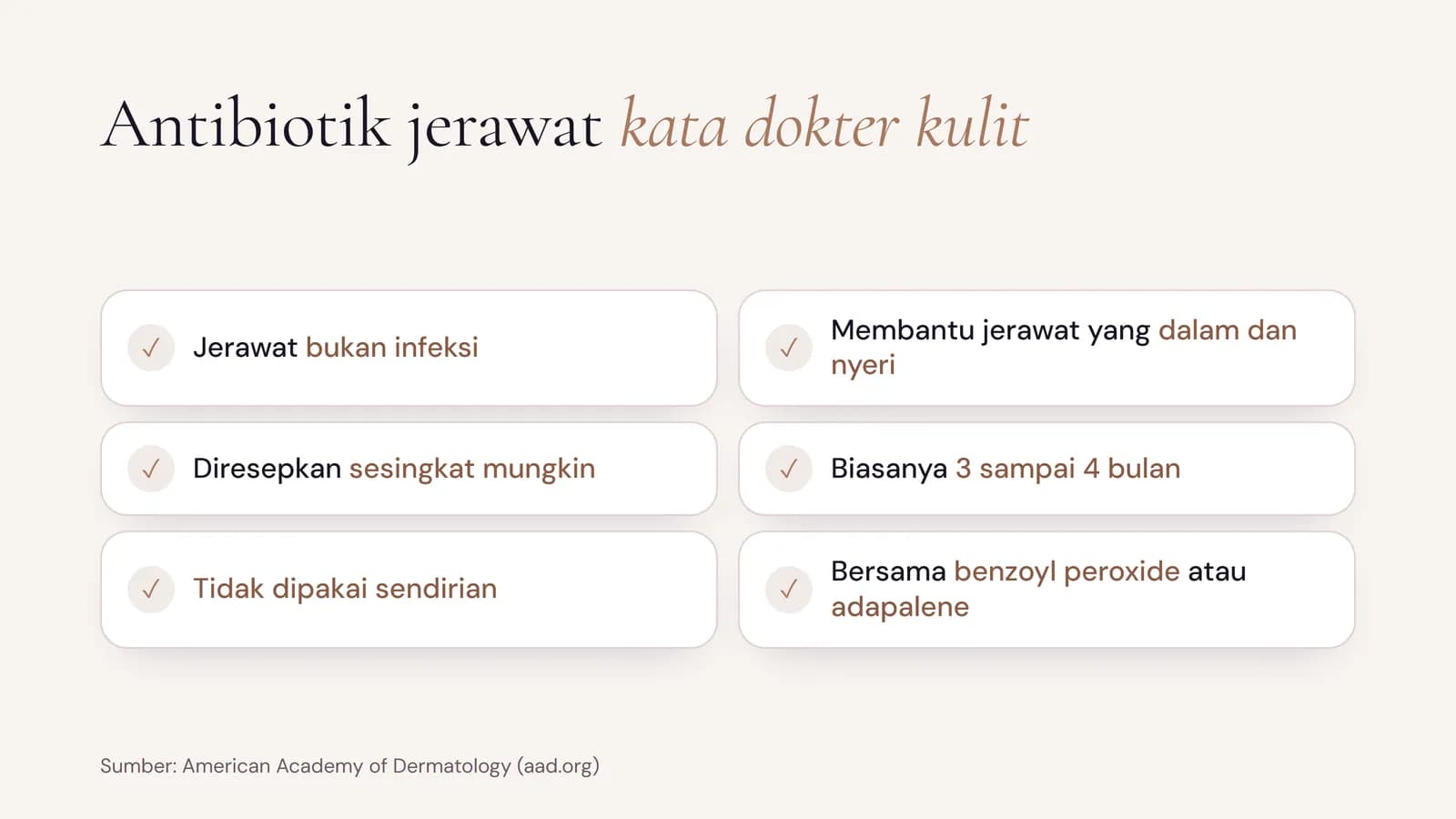
According to the AAD, acne is not an infection, but an antibiotic can provide real relief from deep, painful breakouts. Certain antibiotics reduce acne-causing bacteria on the skin and lessen inflammation, so you see fewer breakouts.
Dermatologists prescribe an antibiotic for the shortest time possible. Because acne takes time to treat, this usually means three to four months. The AAD also explains that when taken alone, an antibiotic can quickly lose its ability to fight acne and the bacteria can become resistant. That is why dermatologists pair it with other medicine such as benzoyl peroxide or adapalene gel.
The same applies to topical antibiotics. The AAD says a topical antibiotic is used along with a medication or wash that contains benzoyl peroxide to reduce the risk of antibiotic resistance.
If your doctor prescribes antibiotics for acne
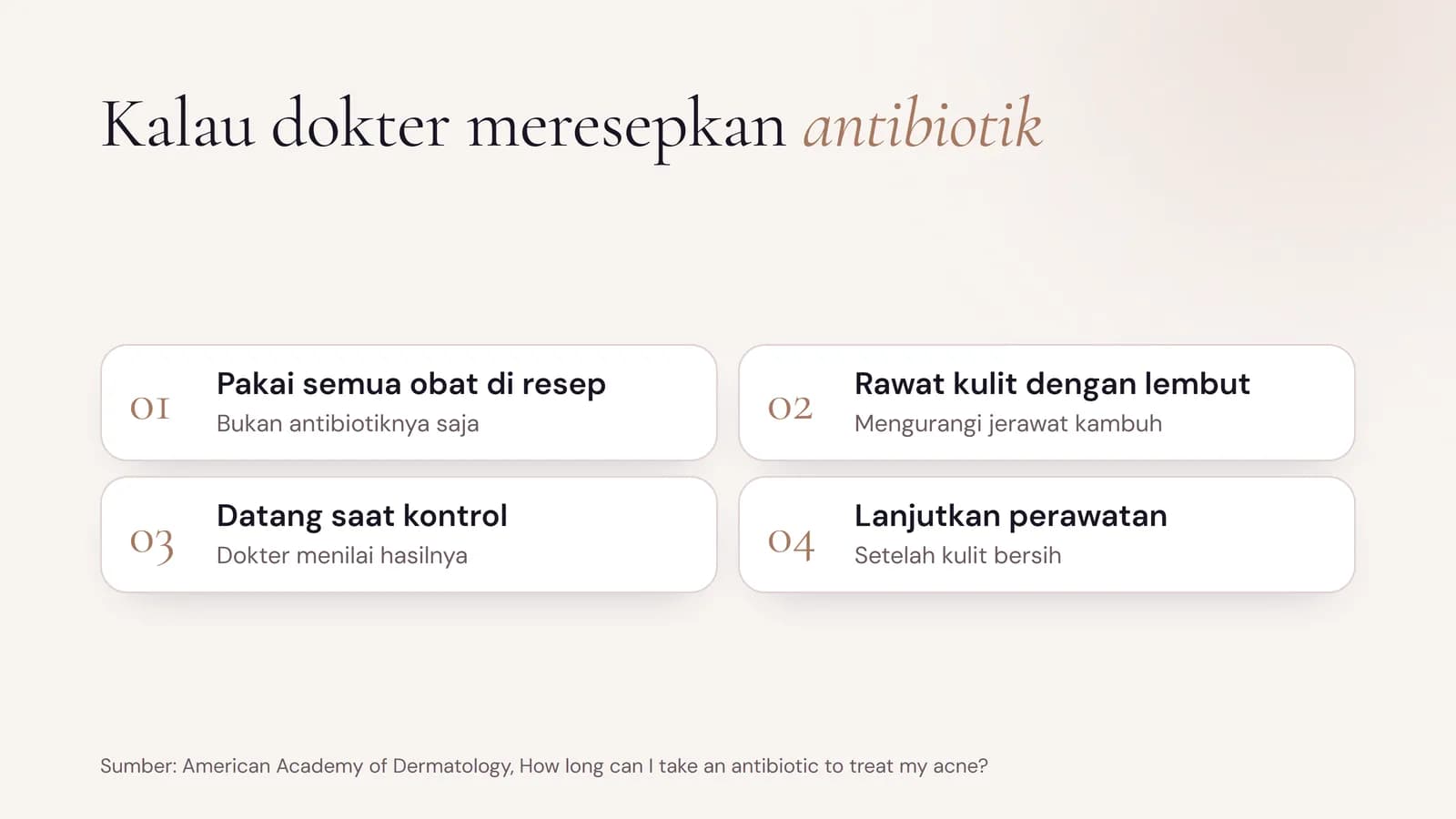
- Use all the medicine in your treatment plan, not just the antibiotic, so you need the antibiotic for as short a time as possible.
- Treat your skin gently to reduce flare-ups.
- Keep follow-up appointments, so your dermatologist can see whether the treatment works or needs to change.
- Continue treatment once your skin clears. Most people can keep their skin clear with medicine they apply to the skin, so they no longer need an antibiotic.
These steps are summarised from AAD guidance. Do not buy or use antibiotics for acne without a prescription, and do not stop or extend a prescribed course on your own.
Daily acne care from Kira
Antibiotics are for your doctor to decide. For daily care, Kira can help you build a routine from one selfie. Here is Kira's real reply to the question “how do I deal with my acne and acne marks?” from one selfie of an AI model:
For this model, Kira read combination skin with active breakouts and acne marks. The routine starts with a gentle cleanser containing salicylic acid, then a toner, a serum with niacinamide or vitamin C for acne marks, and a non-comedogenic moisturiser. Kira's advice is AI guidance, not a medical diagnosis. If acne is severe or does not improve, see a dermatologist.
For a full routine, read how to deal with acne and skincare for oily skin. For marks that stay behind, see how to fade dark spots.
Ask Kira for a routine for your skin
Send a front-facing selfie in natural light to Kira on WhatsApp and ask how to care for your acne. Kira replies in 10 to 15 seconds with routine steps, ingredients to look for and avoid, and daily tips. See the acne and marks example.
Frequently asked questions
Does acne need to be treated with antibiotics?
Not always. According to the American Academy of Dermatology, acne is not an infection, but antibiotics can help deep, painful breakouts by reducing bacteria and inflammation. Whether to use one is your doctor's decision, and acne antibiotics are always used together with another acne medicine.
How long can you take antibiotics for acne?
Dermatologists prescribe antibiotics for acne for the shortest time possible, usually three to four months, although some people need longer. Using all the medicine in your plan, treating your skin gently and keeping follow-up appointments helps shorten how long you need the antibiotic.
Why should acne antibiotics not be used alone?
According to the American Academy of Dermatology, an antibiotic taken alone can quickly lose its ability to fight acne, and the bacteria can become resistant. That is why dermatologists pair it with other medicine such as benzoyl peroxide or adapalene. Antibiotic resistance is a global health problem.
Can I buy acne antibiotics without a prescription?
It is best not to. BPOM urges people not to use antibiotics without a doctor's prescription, because unwise use makes bacteria resistant. BPOM's monitoring found 63.75% of pharmacies still hand out antibiotics without a prescription. For acne, see a dermatologist first.
Sources
Facts in this article refer to the sources below.
- Berita kecantikan
- Jerawat
- Antibiotik
- BPOM