Bangs that suit your face shape can change your look without cutting off much length. But bangs also touch your forehead more often. According to the American Academy of Dermatology (AAD), oil from your hair and hair care products can cause acne on your forehead and along your hairline.
This article shows a real Kira result for an oval face, the styles to skip, and how to wear bangs without forehead breakouts.
A real Kira result for an oval face
Here is a real Kira result for the question “which bangs suit my face?”. Kira reads the face shape from a selfie, then recommends bangs with previews, plus styles to avoid.
- Curtain Bangs look soft and add dimension to the face.
- Wispy Bangs look light and natural, and suit an oval face.
- Blunt Bangs give a bolder, more modern look.
For this face, Kira suggests avoiding thick straight-across bangs, which can make the face look wider, and notes that side-swept bangs can work but are not as flattering as the other styles. Kira's tip: cut bangs a little longer than you want, because they tend to shrink, and use light styling products.
These recommendations are for the face in that selfie. For the best result, have your bangs cut at a professional salon.
Thinking about a bigger change? See haircuts for a round face and hairstyles that won't cause hair loss.
Why bangs can cause forehead acne
According to the AAD, the oil from your hair can cause acne on your forehead. Hair care products can be the cause too: shampoos, conditioners and styling products can cause whiteheads and tiny bumps along the hairline, the upper forehead and the back of the neck. This is common enough to have a medical name, acne cosmetica.
When hair care products contain oil, the oil can find its way to your skin and clog pores. The AAD names oily styling products such as pomade as the most obvious culprits, but gels, waxes, pastes and sprays can contain oil too.
Hair product labels to look for
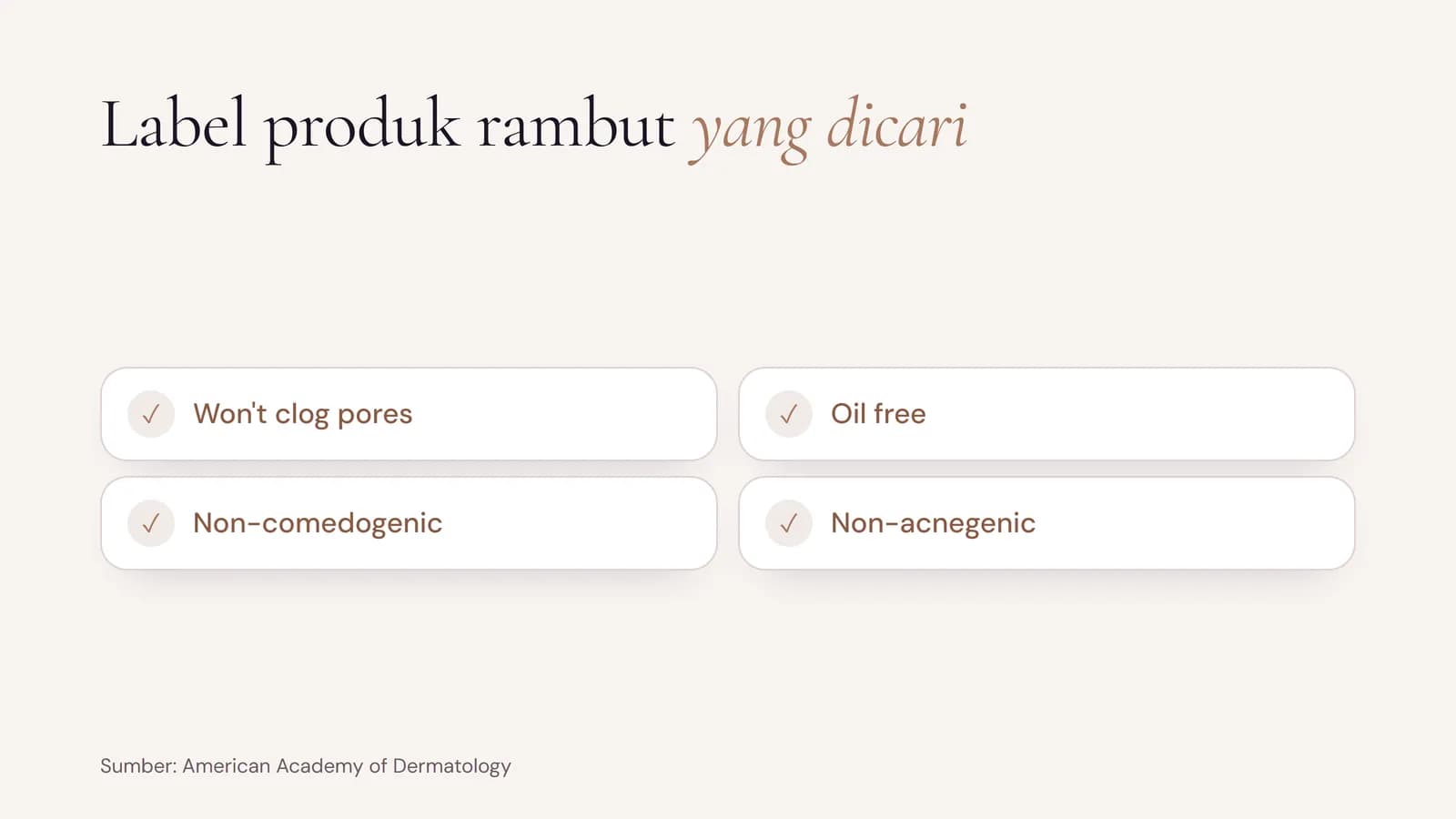
If the culprit is not obvious, the AAD suggests stopping any product that does not show one of these words on the label: won't clog pores, oil free, non-comedogenic or non-acnegenic.
How to wear bangs without forehead breakouts
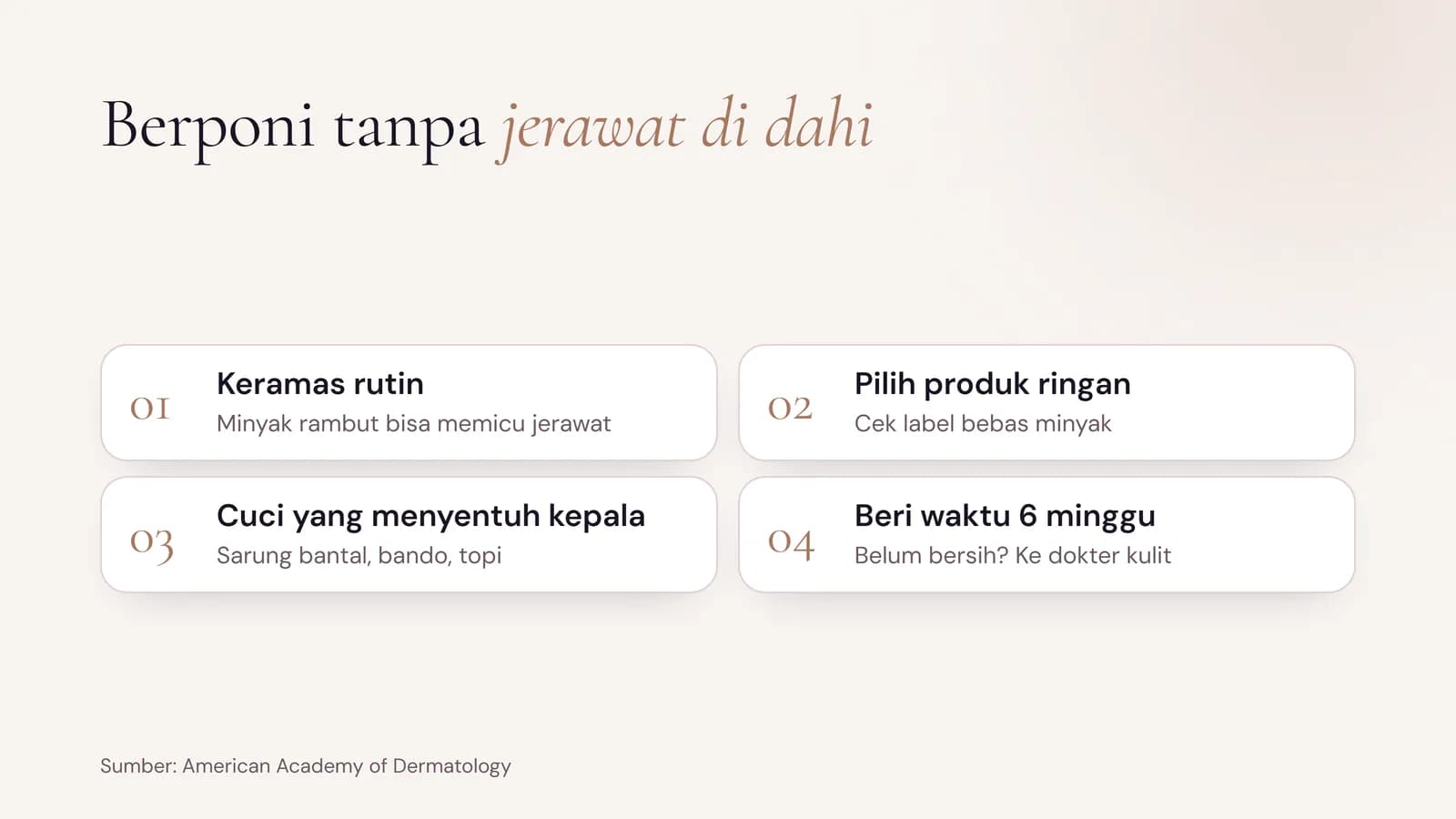
- Shampoo regularly. The AAD advises that if you have oily hair, shampoo more often than you do now and keep your hair away from your face.
- Choose light styling products labelled oil free or non-comedogenic.
- Wash everything your head touches, since residue can stick to pillowcases, sheets, hats, headbands and visors.
- Give it time. After you stop using the products causing it, acne usually clears slowly over 4 to 6 weeks.
If your skin is acne-prone in general, read how to treat acne.
When to see a dermatologist
According to the AAD, acne from hair care products tends to clear on its own once the product stops touching your skin, and you should see clearing within 6 weeks. If your skin has not cleared by then, consider seeing a dermatologist.
Ask Kira which bangs suit you
Send Kira a selfie in natural light on WhatsApp and ask which bangs suit you. Kira reads your face shape and recommends styles with previews. See the bangs example.
Frequently asked questions
How do I choose bangs for my face shape?
Start by checking your face shape and forehead proportions in a straight-on photo taken in natural light, then choose bangs that balance them. Kira can read your face shape from a selfie and recommend bangs with previews, including the styles best avoided.
Which bangs suit an oval face?
In a real Kira result for an oval face, the recommendations were Curtain Bangs for a soft look, Wispy Bangs for a natural look, and Blunt Bangs for a bolder look. Thick straight-across bangs were best avoided because they can make the face look wider.
Can bangs cause forehead acne?
They can. According to the American Academy of Dermatology, oil from your hair can cause acne on your forehead, and oily hair care products can cause tiny breakouts along the hairline and forehead. Shampoo regularly and choose products labelled non-comedogenic or oil free.
How long does acne from hair products take to clear?
According to the American Academy of Dermatology, after you stop using the products causing it, acne usually clears in 4 to 6 weeks. Also wash pillowcases, hats and headbands that have product residue. If it has not cleared after 6 weeks, see a dermatologist.
Sources
Facts in this article refer to the sources below.
- Rambut
- Poni
- Bentuk wajah
- Jerawat