The right concealer shade for dark circles is usually not one colour but two steps: a colour corrector to neutralise the dark tone, then a concealer that blends with your skin. With the wrong shade, the under-eye area looks grey or chalky, or the dark circle still shows through.
This article covers how to choose a corrector and concealer, which shades to avoid, how to reduce dark circles according to Cleveland Clinic, the FDA's safety rules for eye makeup, and a real result from Kira.
Colour corrector or concealer: what is the difference?
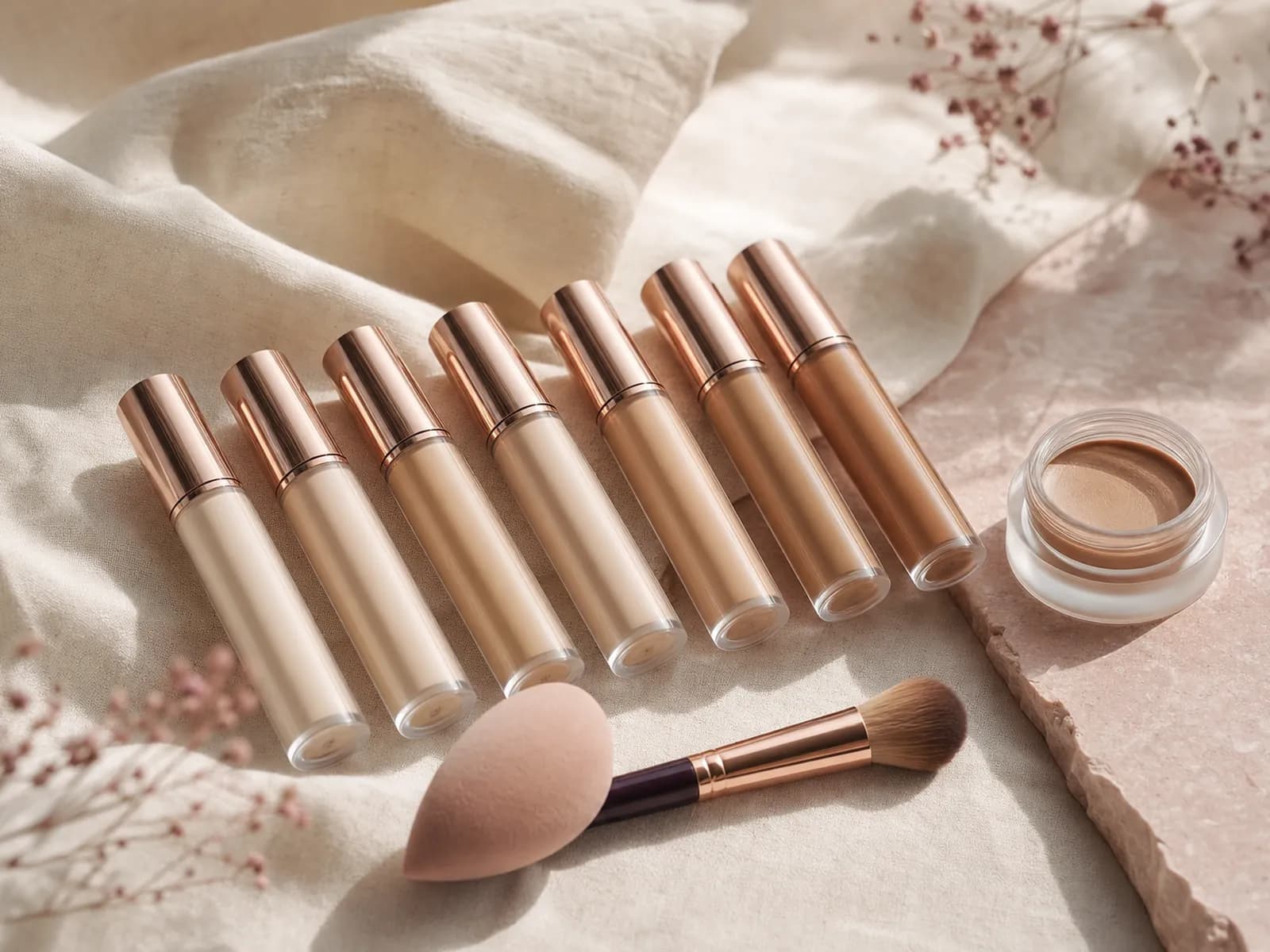
Concealer evens out uneven colour so it blends with the surrounding skin. A colour corrector is the step before it, applied thinly to the area that differs most, such as bluish dark circles. Not everyone needs a corrector: if your dark circles are light, a concealer one shade lighter than your skin is often enough.
Cleveland Clinic lists makeup as one of the at-home ways to deal with dark circles: use an under-eye concealer and foundation to blend the colour of your skin. Concealer works on the surface; it does not remove the cause.
How to choose a concealer shade that suits you
- Look at your dark circles in natural light. Bluish, purplish and brownish tones need different correctors.
- Use a corrector only on the darkest area. Apply it thinly, not across the whole under-eye.
- Choose a concealer that blends with your skin, or one that is slightly lighter for the under-eye. Too light makes the area look chalky.
- Match your undertone. Warm skin usually blends better with warmer concealers, cool skin with more neutral or pink ones.
- Check in more than one light, for example by a window and indoors, before you decide.
Kira's real result for dark circles
Here is Kira's real result for the question "which concealer shade covers my dark circles?" from one selfie of an AI model:

For this model, Kira read fair skin with a neutral undertone and the dark circles as the area to cover. The picks:
- Peach Corrector for the dark circles, because it neutralises the bluish tone.
- Light Ivory Concealer for blemishes and dark circles, because it suits fair skin.
- Warm Sand Concealer for blemishes, because it matches the skin tone.
- Dark Concealer to avoid, because it is too dark for the skin.
Kira's tip: apply it thinly with your fingers so it does not look cakey. The preview above was made by Kira directly on the model's face, so you can see the difference before you buy.
Kira's suggestions are AI makeup advice, not a medical diagnosis. If dark circles appear suddenly, come with swelling, or do not improve, see a doctor.
Before concealer, reduce the dark circles

Concealer works with a lighter touch when the dark circles fade. According to Cleveland Clinic, things you can try at home include:
- Sleep at least seven hours each night to prevent shadows around your eyes.
- Raise your head with extra pillows so fluid does not collect under your eyes at night.
- Use a cold compress to help shrink dilated blood vessels.
- Wear sunscreen around your eyes and sunglasses.
- Manage stress and cut down on alcohol and smoking.
The full guide is in how to reduce dark circles.
Safety rules for eye-area makeup

The skin under the eyes is thin and close to the eye. From the FDA's Eye Cosmetic Safety guidance:
- Wash your hands before applying eye cosmetics, because bacteria on your hands can cause infections.
- Do not share cosmetics, not even with your best friend. For store testers, use single-use applicators.
- Keep containers clean and do not store cosmetics above 85°F (about 29°C), for example in a hot car.
- Stop using a product that causes irritation, and see a doctor if the irritation persists.
In Indonesia, make sure your concealer has a BPOM distribution permit and follow the Cek KLIK habit. Not sure which base to use? Read cushion vs foundation.
Ask Kira for your concealer shade
Send Kira a selfie in natural light on WhatsApp and ask which concealer shade suits you. Kira replies in 10 to 15 seconds with a suggested corrector and concealer, the reasons, shades to avoid, and a preview on your own face. See the concealer example.
Frequently asked questions
How do I choose a concealer shade for dark circles?
First look at the colour of your dark circles in natural light. If needed, apply a thin colour corrector only on the darkest area, then a concealer that blends with your skin or is slightly lighter for the under-eye. Match your skin undertone and avoid shades that are far too light or too dark.
Do I need a colour corrector before concealer?
Not always. A corrector helps when dark circles are deep or bluish, because it neutralises the tone before the concealer goes on. In Kira's example result, Peach Corrector was chosen for the dark circles because it neutralises the bluish tone. If your circles are light, concealer alone is often enough.
Why does my under-eye look grey after concealer?
Usually the concealer shade does not match your skin, or there is no corrector step for dark circles. A concealer that is too light over a dark area can look grey or chalky. Try a thin corrector on the darkest area first, then a concealer closer to your skin tone.
Can concealer get rid of dark circles?
No. Concealer only hides the colour on the surface. According to Cleveland Clinic, dark circles may be reduced by sleeping at least seven hours, raising your head with extra pillows, cold compresses, sunscreen around the eyes and managing stress. If they do not improve, see a doctor.
Sources
Facts in this article refer to the sources below.
- Makeup
- Concealer
- Mata panda
- Base makeup