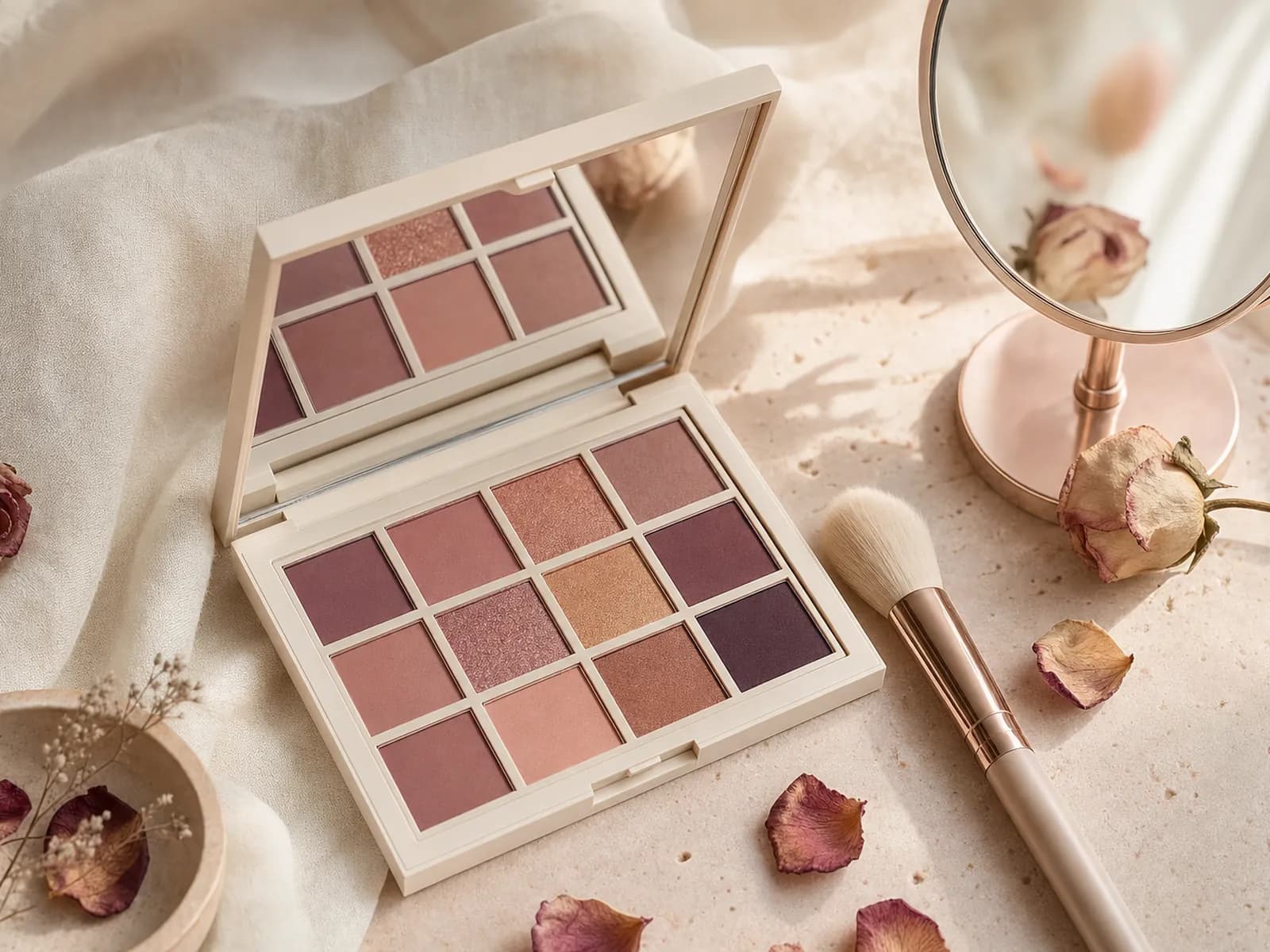
The eyeshadow colors that suit you are easiest to pick from your skin undertone. Warm undertones usually blend with bronze, peach, copper and gold; cool undertones look better with mauve, plum, dusty rose and taupe; neutral undertones can wear both. Once you have the colors, your eye shape decides where to put them.
In this guide you will find a color table by undertone, picks for tan and medium skin, placement by eye shape, the difference between matte, shimmer and metallic finishes, a real analysis from Kira, and the eye makeup safety tips from the U.S. Food and Drug Administration (FDA).
How to choose eyeshadow colors for your undertone
Your undertone is the base color under the surface of your skin: warm (yellow or golden), cool (pink or bluish) or neutral. Your skin can tan, but the undertone stays the same, which makes it the most reliable guide. If you are not sure yet, start with how to find your skin undertone.

- Warm undertones: bronze, peach, copper and gold echo the golden tones in your skin. Cool gray or icy blue often looks separate from the face.
- Cool undertones: mauve, plum, dusty rose and taupe look clean and soft. A very yellow bronze or gold can make the eye area look dull.
- Neutral undertones: the most flexible. Milk chocolate, champagne and rose gold work every day, and you can lean warm or cool from there.
This is aesthetic guidance based on how Kira reads undertone and color, not a scientific rule. Your own taste and comfort still come first.
Eyeshadow colors for tan and medium skin
Tan and medium skin ("sawo matang" in Indonesian) has a medium to deep base, and the undertone can be warm, cool or neutral. Because the base is deeper, richly pigmented colors usually show up better than very pale ones.
- Everyday: milk chocolate, soft copper or a brownish mauve. Enough dimension for the office or campus without looking heavy.
- A little bolder: bronze or deep plum. Bronze for warm undertones, plum for cool ones.
- Events and photos: metallic gold or copper on the center of the lid. Pair it with eyeliner styles for your eye shape for a defined look.
Pale matte white often looks gray on tan skin. If you want a highlight, choose champagne or a light gold with a little sheen instead.
Eyeshadow placement for your eye shape
Color decides harmony, placement decides shape. These are common makeup artist guidelines, not strict rules:
- Almond eyes: the most flexible. Almost any technique works, from a soft gradient to a smoky eye.
- Monolids: blend in layers from the lash line upward, with the darkest shade at the bottom. A touch of shimmer on the center of the lid adds dimension.
- Hooded eyes: place the transition shade slightly above the natural crease so it stays visible when your eyes are open.
- Round eyes: focus the darker shade on the outer corner and pull it slightly outward to elongate the eye.
- Downturned eyes: sweep the darker shade upward at the outer corner, not downward, for a lifted effect.
Lashes frame the final look too. See lash styles for your eye shape.
Matte, shimmer or metallic?
- Matte: no shine. Ideal for crease transition shades and work makeup.
- Shimmer: fine reflective particles. Great on the center of the lid or the inner corner for a fresh look.
- Metallic: a strong, foil-like shine. Best for evenings and photos, kept to one area.
The easiest combination for beginners: one matte shade for the crease, one main lid color and a touch of shimmer in the center.
How to apply eyeshadow in 4 steps

- Apply a thin base of concealer or primer on the lid so the color goes on evenly.
- Transition shade in the crease: a matte color slightly deeper than your skin, blended in small circles.
- Main color on the lid: pat it on with a flat brush, then blend the edge upward.
- Shine on the center of the lid: a little shimmer or metallic with a fingertip or small brush.
A real eyeshadow analysis from Kira
Here is Kira’s real answer to the question "which eyeshadow suits me?". Kira reads undertone, eye color and eye shape from a selfie, then recommends shades with their finish, a preview on the user’s own photo, and shades to avoid.
In this example, Kira read a cool undertone, dark eyes and almond-shaped eyes. It recommended Mauve (matte) for a soft, elegant look, Plum (shimmer) to add depth and Dusty Rose (matte) for a natural look. Bronze and Gold were flagged to avoid because they are too warm for this undertone, with the tip to use a soft color gradient on the lid. It matches the cool undertone row in the table above.
Eyeshadow safety tips from the FDA
The FDA says most eye cosmetics are safe when used properly, but warns about three risks: infection, injury from the applicator and unapproved color additives. Misused eye cosmetics can grow bacteria or fungi, and according to the FDA, in rare cases an infection from an eye cosmetic has caused temporary or permanent blindness.

- Stop using a product right away if it causes irritation. If the irritation persists, see a doctor.
- Avoid eye cosmetics during an eye infection or when the skin around the eye is inflamed. Wait until it heals, and throw away any eye cosmetics you were using when you got the infection.
- Wash your hands before applying, and make sure any brush or applicator that touches the eye area is clean.
- Don’t share your cosmetics. Another person’s bacteria may be hazardous to you.
- Keep containers clean of dust and dirt, and don’t use old containers of eye cosmetics.
- Don’t store cosmetics above 85 degrees Fahrenheit (about 29 degrees Celsius), for example in a hot car for long periods.
- Never apply or remove eye makeup in a moving vehicle, even as a passenger. A bump or sudden stop can make the applicator scratch your cornea, and even a slight scratch can lead to a serious infection.
- Only use products made for the eye area. The FDA’s example: don’t use a lip liner as an eyeliner.
Be careful with kohl
In the United States, a number of color additives approved for cosmetics in general are not approved for use in the eye area. The FDA also singles out kohl (also called kajal or surma): it is unapproved for cosmetic use in the U.S. because it consists of salts of heavy metals such as antimony and lead, and there have been reports linking it to lead poisoning in children. Some products use the word "kohl" only to name the shade, so check the ingredient list.
This article is not medical advice. Kira’s color recommendations are aesthetic. If your eyes or lids itch, sting, turn red or swell after using eyeshadow, stop using it and see a doctor.
How to ask Kira about eyeshadow colors
- Open WhatsApp and chat with Kira, no app to install.
- Send a selfie in natural light, facing the camera, without eye makeup, plus a question such as "which eyeshadow suits me?".
- In about 10 to 15 seconds, Kira replies with your undertone and eye shape reading, recommended shades and finishes, shades to avoid and a preview on your own photo.
You get 5 free consultations a day. See the eyeshadow example from Kira first, or read how online beauty consultations with AI work. Thinking about changing your eye color too? There is also a guide to colored contacts that suit you.
Frequently asked questions
Which eyeshadow colors suit tan or medium skin?
Richly pigmented shades such as milk chocolate, copper, bronze and deep plum usually show up well and blend on tan or medium skin. Choose bronze or copper for a warm undertone and plum or mauve for a cool one. Pale matte white often looks gray, so swap it for champagne or a light gold.
How do I choose eyeshadow for my undertone?
Warm undertones suit bronze, peach, copper and gold. Cool undertones look better with mauve, plum, dusty rose and taupe. Neutral undertones are the most flexible, starting with milk chocolate, champagne or rose gold. Check your undertone in natural daylight without makeup so the result is accurate.
What is the difference between matte, shimmer and metallic eyeshadow?
Matte has no shine and works for crease transition shades and work makeup. Shimmer has fine reflective particles and suits the center of the lid or the inner corner. Metallic has the strongest, foil-like shine for events and photos. Beginners can pair a matte crease with a little shimmer on the lid.
Is it okay to share eyeshadow with a friend?
It is better not to. The FDA says not to share cosmetics because another person’s bacteria may be hazardous to you. It also advises washing your hands before applying eye cosmetics, using clean applicators and throwing away any eye cosmetics you were using when you got an eye infection.
What should I do if eyeshadow irritates my eyes?
According to the FDA, stop using an eye cosmetic immediately if it causes irritation, and see a doctor if the irritation persists. Also avoid eye makeup while you have an eye infection or the skin around your eye is inflamed, and wait until it has fully healed before using it again.
Sources
Facts in this article refer to the sources below.
- Mata
- Eyeshadow
- Undertone
- Makeup