Indonesia's mandatory halal rule (Wajib Halal) applies from 18 October 2026. Ahmad Haikal Hasan, head of BPJPH, Indonesia's halal product assurance agency, confirmed it is going ahead with no delay. What does it mean if you regularly buy skincare and makeup?
This article summarises the official facts from BPJPH and BPOM, what to check before buying cosmetics, and how to choose skincare that suits your skin.
Official facts
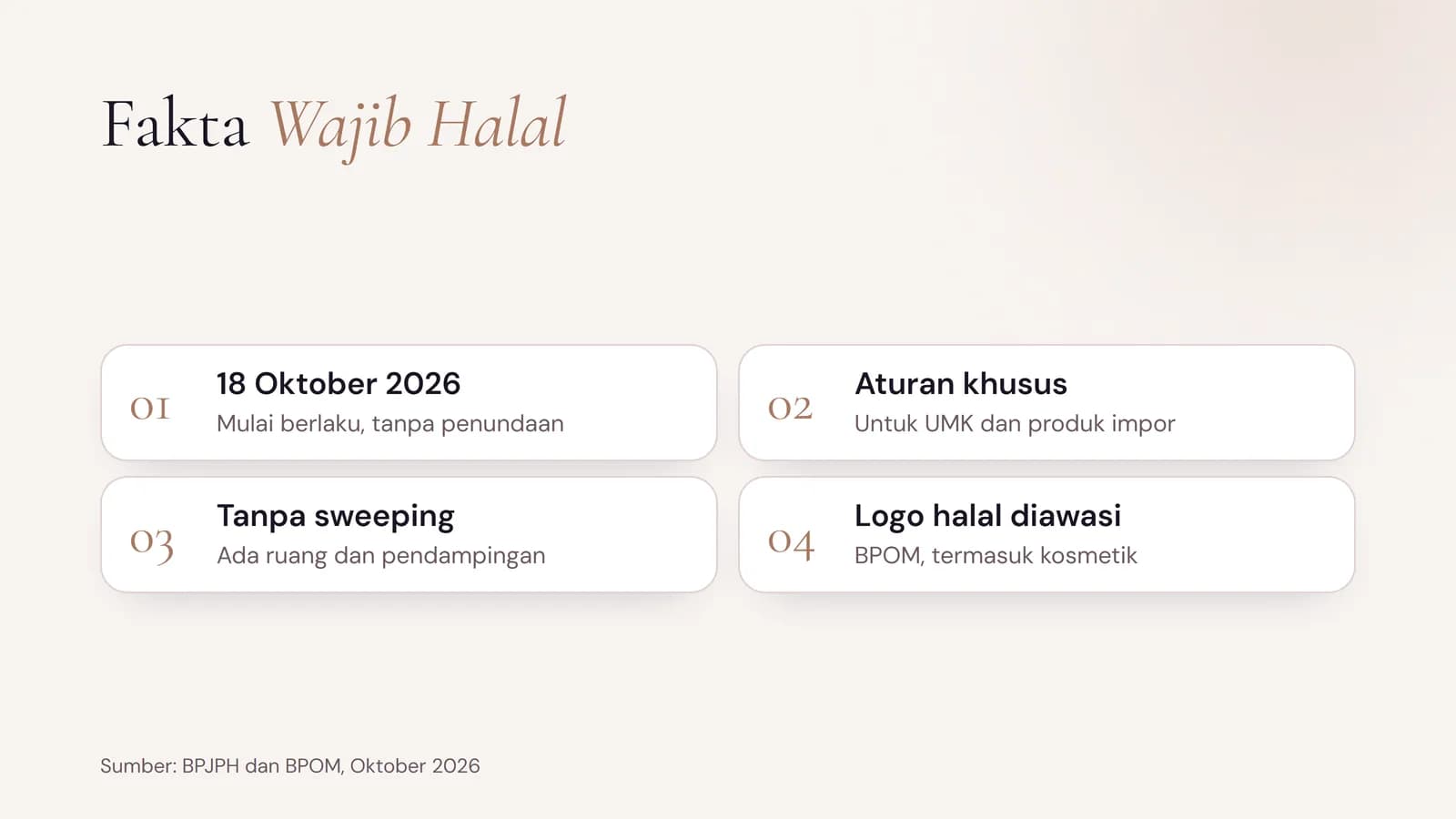
- Applies from 18 October 2026 with no delay, according to BPJPH.
- Special rules are being prepared for micro and small businesses and for imported products, so implementation stays orderly without disrupting businesses.
- No sweeping raids. BPJPH says businesses that are not ready will be given room, time and support.
- BPOM monitors halal logos. According to BPOM, it monitors halal logos after products reach the market on herbal medicines, quasi-drugs, health supplements and cosmetics.
The head of BPJPH also stressed two things: do not make halal claims without meeting the requirements, and watch out for scams in BPJPH's name that ask for money as fines or penalties. Official information is only on bpjph.halal.go.id.
What to check before buying cosmetics
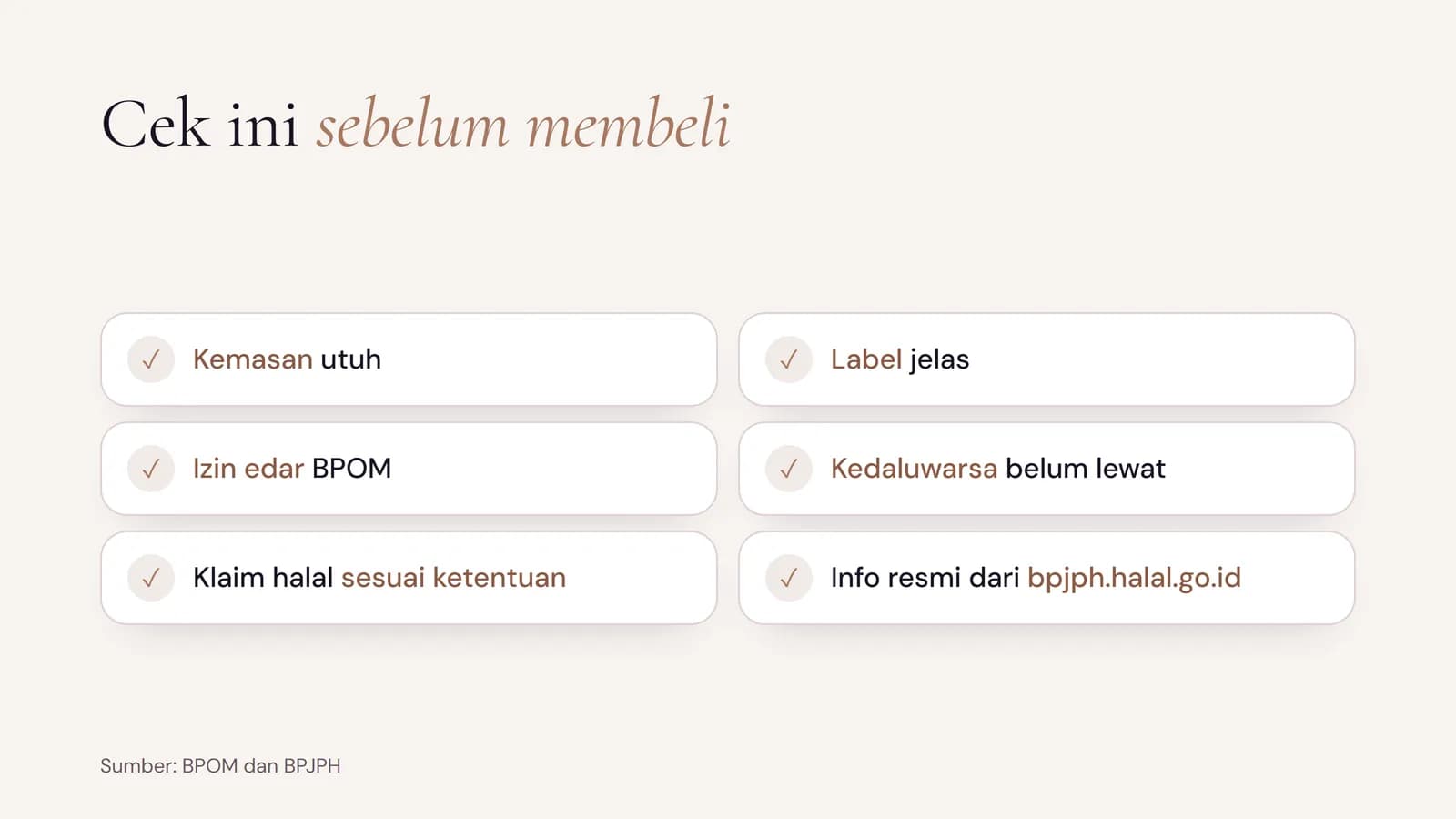
A halal logo is one thing. Product safety is still checked with the habit BPOM recommends, Cek KLIK:
- Kemasan (packaging) in good condition.
- Label with clear product information.
- Izin edar (marketing authorisation) registered with BPOM.
- Kedaluwarsa (expiry) not yet passed.
Read the full guide on how to check if cosmetics are safe with Cek KLIK.
Choose skincare that suits your skin
A safe product is not automatically right for every skin. Here is a real Kira result for the question “my skin is sensitive and gets red easily, what care should I use?”:
- Low-pH cleanser: look for centella asiatica.
- Light moisturiser: look for panthenol and ceramide.
- Soothing serum: look for allantoin and madecassoside.
Kira also suggests avoiding alcohol-based products, harsh face scrubs and heavy moisturisers. This is AI advice, not a medical diagnosis. If things do not improve within 4 weeks, see a dermatologist. Our full guide is in skincare for sensitive skin.
Ask Kira which skincare suits you
Send Kira a selfie in natural light on WhatsApp and ask about your skin concern. Kira suggests a routine and ingredients to look for within 10 to 15 seconds, so you know what to check on the label. See the sensitive skin example.
Frequently asked questions
When does Indonesia's mandatory halal rule start?
According to BPJPH, mandatory halal implementation began on 18 October 2026 with no delay. The government is also preparing special rules for micro and small businesses and for imported products, so implementation stays orderly, proportional and does not disrupt businesses.
Will there be raids on products without halal certification?
No. Ahmad Haikal Hasan, the head of BPJPH, said there will be no coercion and no sweeping raids on businesses. Businesses that are not ready will be given room, time and support, while making halal claims without meeting the requirements is still not allowed.
Who monitors halal logos on cosmetics?
According to BPOM, it monitors the use of halal logos after products reach the market, covering herbal medicines, quasi-drugs, health supplements and also cosmetics sold in Indonesia. Halal certification itself is run by BPJPH under the applicable Indonesian laws and regulations.
What should I check before buying cosmetics?
Use the Cek KLIK habit that BPOM recommends: packaging, label, marketing authorisation and expiry date. Also make sure halal claims meet the requirements, and look for official information on mandatory halal only on bpjph.halal.go.id to avoid scams that use BPJPH's name to ask for money.
Sources
Facts in this article refer to the sources below.
- Skincare
- Wajib Halal
- Kosmetik aman
- Kulit sensitif