Skincare for sensitive skin works best when it stays simple: a gentle cleanser, regular moisturizing, fragrance-free products, and daily sunscreen. According to dermatologists at the American Academy of Dermatology (AAD), harsh cleansing or scrubbing can irritate the skin, while moisturizing helps relieve dryness and itchiness.
This article covers a basic routine for sensitive skin, the ingredients to avoid, how to try new products safely, and a real analysis from Kira.
A skincare routine for sensitive skin

- Use a gentle, non-abrasive cleanser. For dry or sensitive skin, an AAD dermatologist notes that washing once a day in the evening may be enough.
- Moisturize regularly. Look for ceramides, which help hydrate skin, or hyaluronic acid, which is intensely moisturizing.
- Introduce one new product at a time. That way you know which product suits you and which one causes a reaction.
- Wear sunscreen every day. Choose broad-spectrum, water-resistant, SPF 30 or higher. See how to apply sunscreen correctly.
Skincare ingredients to avoid
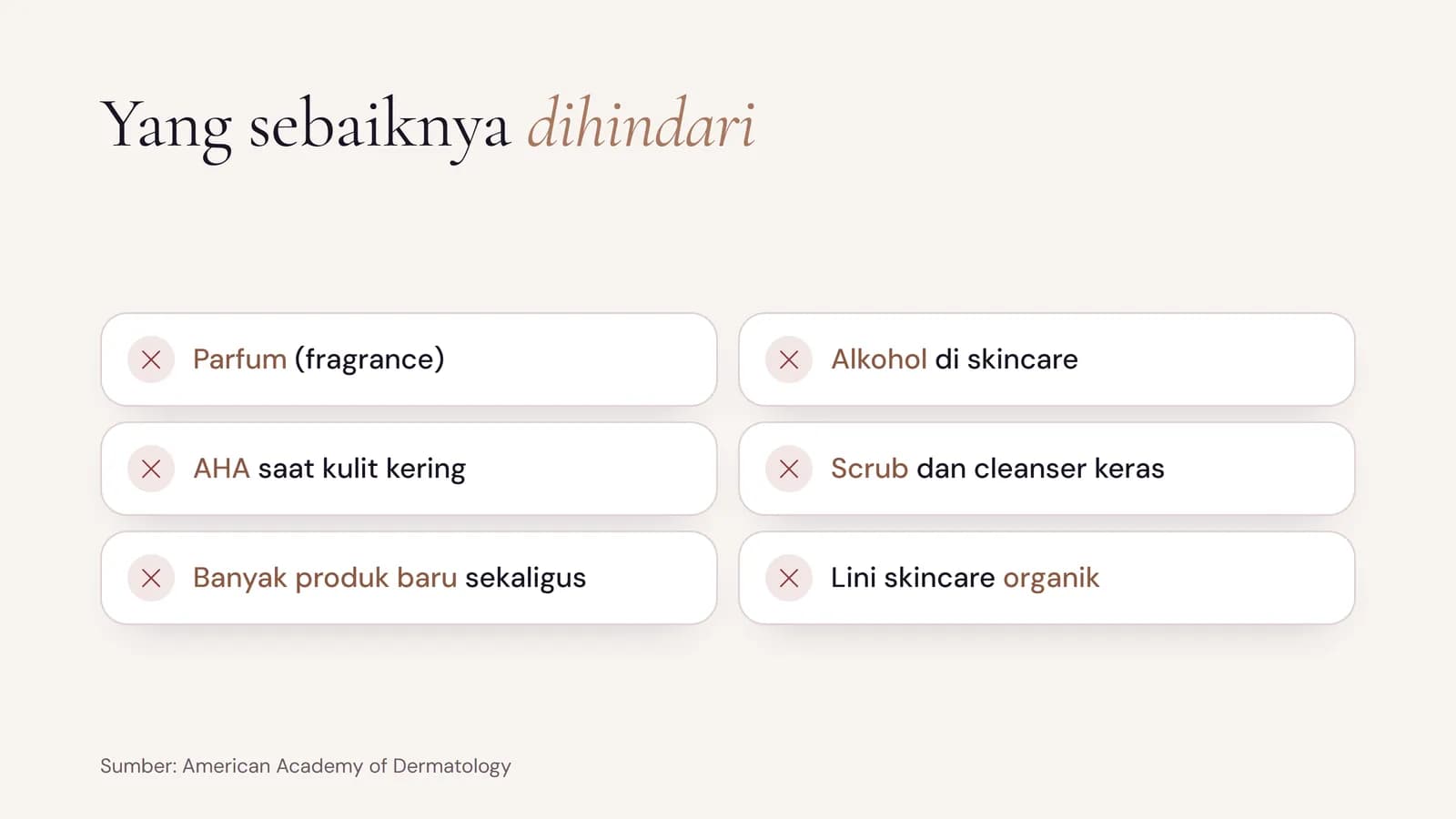
- Fragrance. According to the AAD, added scents can trigger irritation or allergic reactions. Products labeled fragrance-free are safer and gentler.
- Alcohol, AHA, and fragrance when skin is dry. An AAD dermatologist recommends avoiding them so your skin can keep its natural oils.
- Harsh scrubs and cleansers. Scrubbing too hard can irritate the skin.
- Organic skincare lines. For sensitive skin, an AAD dermatologist warns that many of these ingredients can aggravate allergies.
“Natural” or “organic” on the label does not automatically mean safe for sensitive skin. Always check the ingredient list and try a little first.
How to try a new product safely
AAD dermatologists recommend introducing one new product at a time to make sure your skin can tolerate it. For sensitive skin, apply a small amount to a small area of skin first before using it on your whole face. If you notice redness, stinging, or itching, stop using it.
Sensitive skin often feels dry too. If that sounds familiar, take care of your lips as well with our guide to healing dry lips.
A real sensitive skin analysis from Kira
Here is Kira’s real answer to the question “my skin is sensitive and turns red easily, what care do I need?”. Kira reads the skin from a selfie, then builds a routine with ingredients to look for and things to avoid.
Kira’s advice to use a gentle cleanser and a ceramide moisturizer, and to avoid alcohol-based products and harsh scrubs, matches what AAD dermatologists recommend.
When to see a dermatologist
If your skin reacts to over-the-counter products, the AAD recommends seeing a dermatologist who can find the cause and help you choose products that suit your skin. See one too if dryness becomes painful, cracked, or bleeding, since you may need a prescription.
Ask Kira about your sensitive skin
Send Kira a selfie in natural light on WhatsApp. Kira reads redness and sensitivity in your skin, then builds a gentle routine with ingredients to look for and avoid. See the sensitive skin example.
Frequently asked questions
What skincare is good for sensitive skin?
AAD dermatologists recommend a simple routine: a gentle, non-abrasive cleanser, a regular moisturizer with ceramides or hyaluronic acid, fragrance-free products, and broad-spectrum sunscreen with SPF 30 or higher every day. Introduce new products one at a time so you can tell what suits you.
Which ingredients should sensitive skin avoid?
Avoid fragrance, which can trigger irritation or allergic reactions, and alcohol and AHA especially when skin is dry. Skip harsh scrubs and cleansers, since scrubbing too hard irritates skin. AAD dermatologists also warn that organic skincare lines can aggravate allergies in sensitive skin.
How often should you wash sensitive skin?
For dry or sensitive skin, an AAD dermatologist notes that washing once a day in the evening may be enough. Use a gentle, non-abrasive cleanser, then apply a moisturizer right away to help relieve dryness and itchiness.
How do I try new skincare on sensitive skin?
Introduce one new product at a time. Apply a small amount to a small area of skin before using it on your whole face, and watch for a reaction. If you notice redness, stinging, or itching, stop. If your skin keeps reacting, see a dermatologist.
Sources
Facts in this article refer to the sources below.
- Skincare
- Kulit sensitif
- Pelembap
- Sunscreen