How to heal dry, chapped lips is simpler than it seems: use a lip balm that does not irritate, protect your lips from the sun, drink enough water, and stop licking them. According to the American Academy of Dermatology (AAD), this kind of care usually brings noticeable improvement in 2 to 3 weeks.
The lip balm itself is often the problem. Many products feel cool or tingly, yet that sensation means your lips are being irritated. This article covers why lips dry out, the ingredients that help and the ones to avoid, plus a real analysis from Kira.
Why do lips get dry and chapped?
The AAD lists common reasons: cold, dry weather, sun damage, and frequently licking your lips. When lips feel dry, licking them seems natural, but it makes things worse. As saliva evaporates, your lips become drier.
Dry air indoors matters too, not just the weather outside. That is why the AAD suggests a humidifier at home, especially in the bedroom if you breathe through your mouth at night.
Lip balm ingredients for dry lips
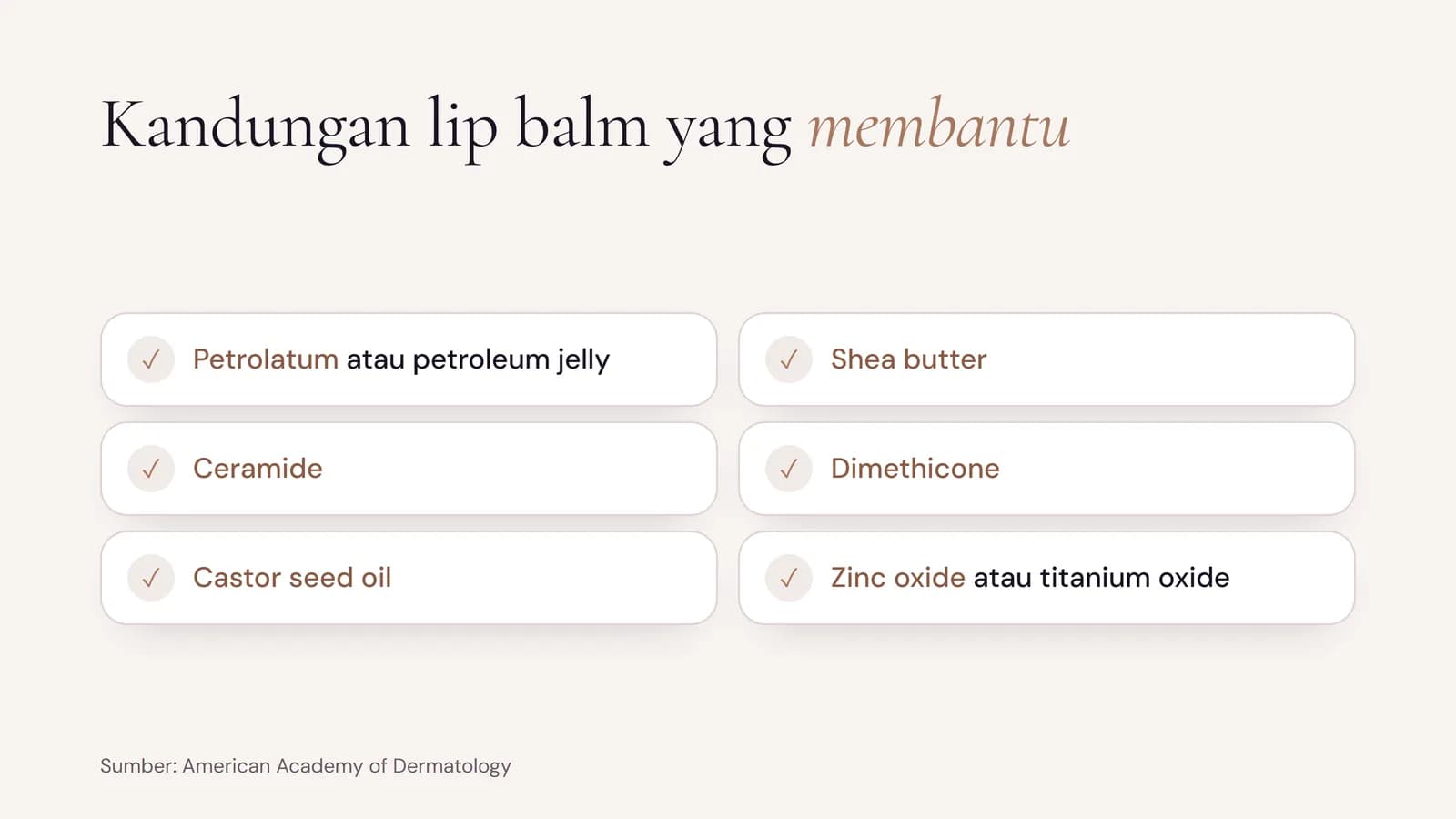
According to the AAD, dermatologists recommend lip products with one or more of these ingredients:
- Petrolatum or white petroleum jelly
- Shea butter
- Ceramides
- Dimethicone
- Castor seed oil, hemp seed oil, or mineral oil
- Sun-protective ingredients such as titanium oxide or zinc oxide
Look for products that are fragrance free and hypoallergenic too. If your lips are very dry and cracked, the AAD suggests a thick ointment such as white petroleum jelly, because ointment seals in water longer than waxes or oils.
Ingredients to avoid while lips are chapped
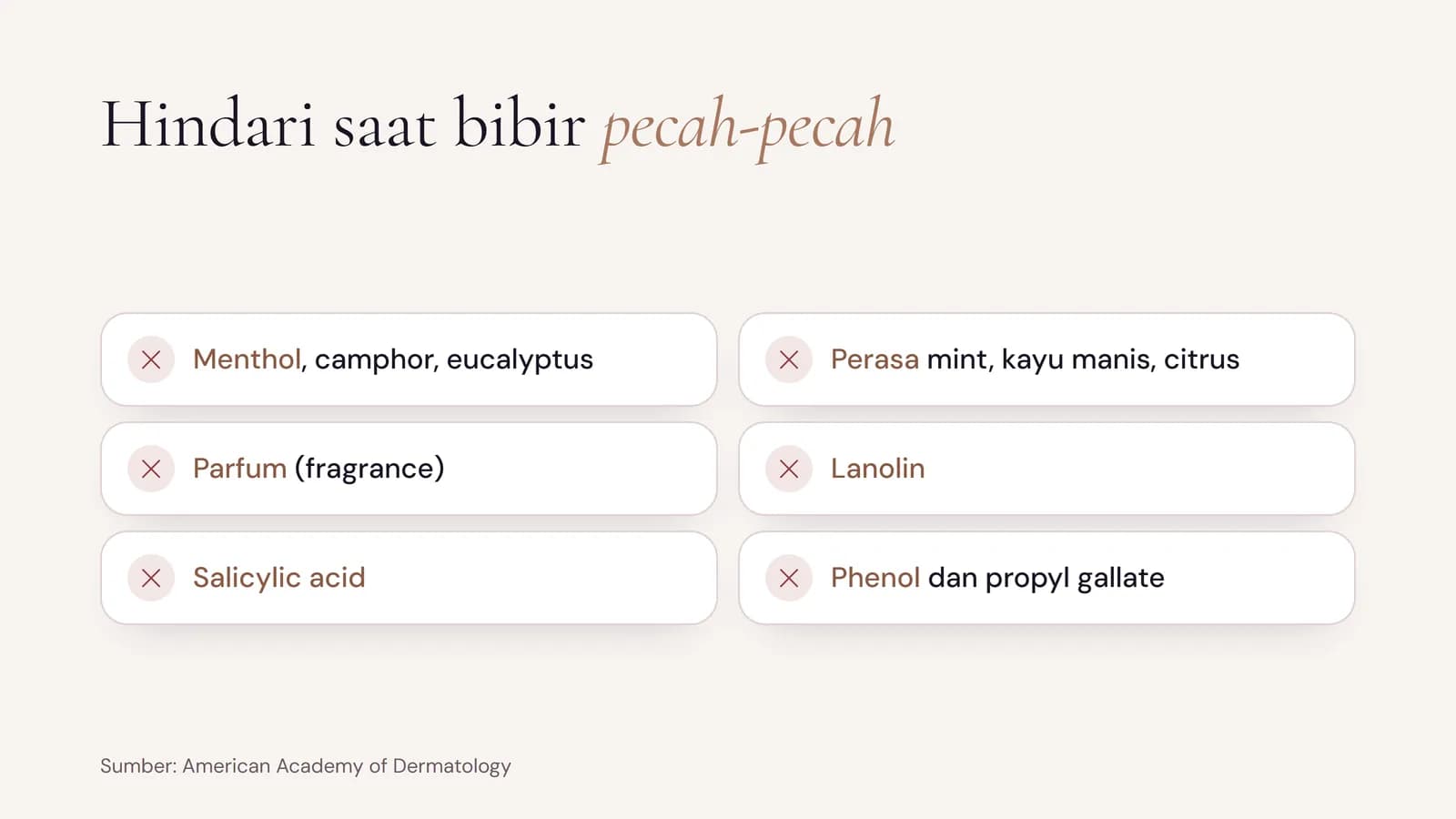
Many people take burning, stinging, or tingling as a sign that the active ingredients are working. The AAD is clear that this is not the case: it means your lips are irritated, and you should stop using the product. While your lips are chapped, avoid lip products that contain:
- Camphor, eucalyptus, and menthol
- Flavoring, especially cinnamon, citrus, mint, and peppermint
- Fragrance
- Lanolin
- Octinoxate or oxybenzone
- Phenol, propyl gallate, and salicylic acid
Steps to heal dry lips
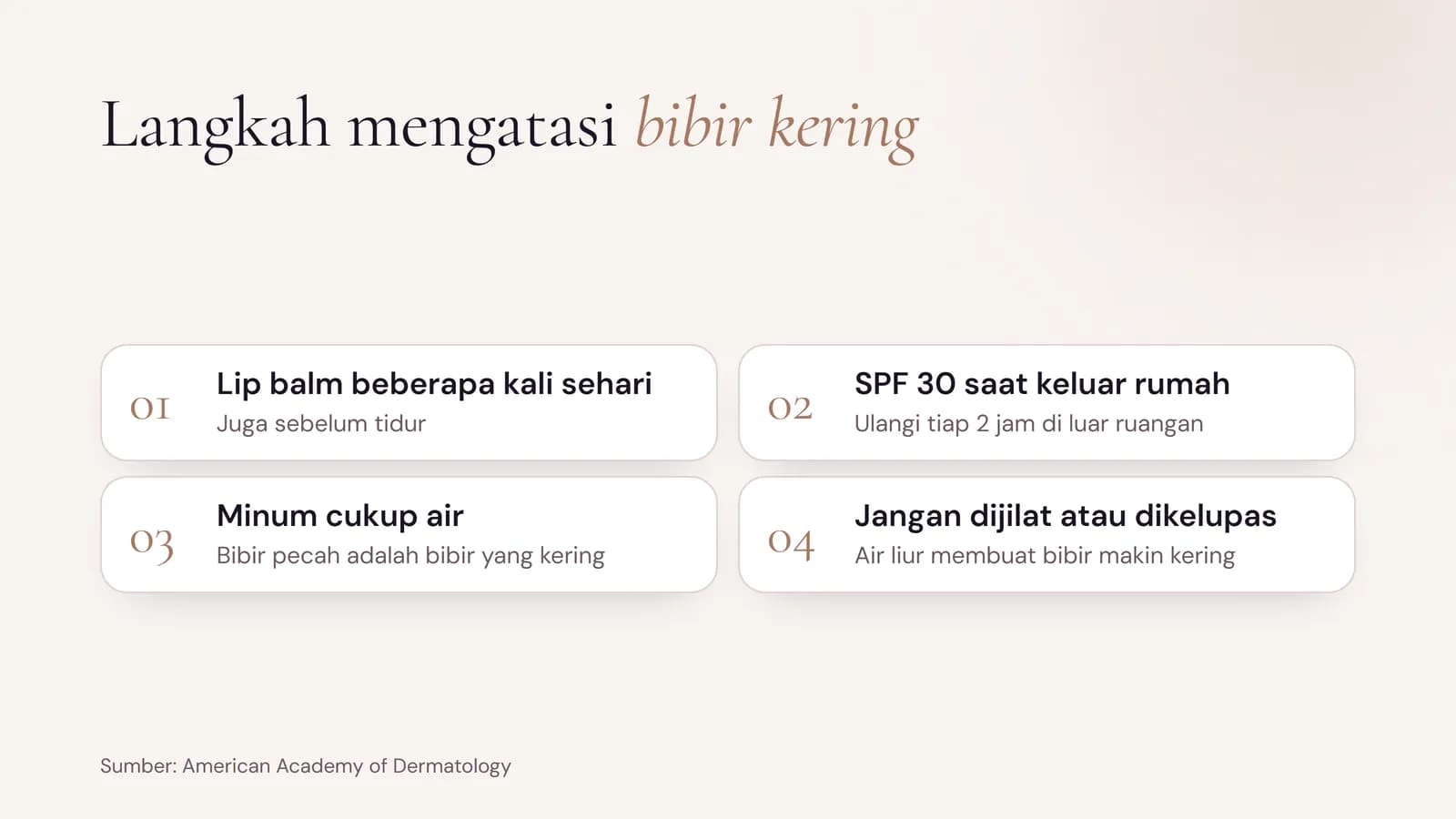
- Apply a non-irritating lip balm several times a day and before bed.
- Use a lip balm with SPF 30 or higher before going outdoors, with titanium oxide or zinc oxide, and reapply every 2 hours while outside. The AAD notes that dry lips burn more easily. See also how to apply sunscreen correctly.
- Drink plenty of water. Chapped lips are dry lips, so stay hydrated.
- Stop licking, biting, and picking at your lips. When you feel like licking them, apply lip balm instead.
- Avoid holding metal items with your lips, such as paperclips or jewelry, since they can irritate sensitive lips.
- Use a humidifier at home, especially in the bedroom.
A real dry lip analysis from Kira
Here is Kira’s real answer to the question “my lips are dry and chapped, what should I do?”. Kira reads the condition of the lips from a selfie, then builds care steps with ingredients to look for and things to avoid.
Note: Kira lists lanolin as one of the moisturizers, while the AAD advises avoiding lanolin while lips are still chapped. If your lips are cracked or sore, start with petrolatum or shea butter, and hold off on lip scrubs until they heal.
Dry lips and lipstick
Matte lipstick tends to highlight lines and flaking. While your lips are still dry, a satin or glossy finish is usually more comfortable. We compare them in matte, satin, and glossy lipstick. Once your lips recover, you can go back to choosing shades with our guide to lipstick colors for tan skin.
When to see a doctor
If your lips do not improve after 2 to 3 weeks of care, the AAD recommends seeing a dermatologist. Chapped lips can have causes other than dry air, such as an allergic reaction or a yeast infection. There is also actinic cheilitis, a precancerous condition that turns one or both lips dry and scaly, which only a doctor can diagnose.
Ask Kira about your lips
Send Kira a selfie in natural light on WhatsApp. Kira reads the condition of your lips, then builds care steps with ingredients to look for and avoid. See the lip care example.
Frequently asked questions
How do I heal dry, chapped lips fast?
Apply a non-irritating lip balm several times a day and before bed, use an SPF 30 lip balm outdoors, drink enough water, and stop licking or picking at your lips. For very cracked lips, use a thick ointment such as petroleum jelly. The AAD says lips usually improve in 2 to 3 weeks.
Which lip balm ingredients are good for dry lips?
Dermatologists recommend petrolatum or white petroleum jelly, shea butter, ceramides, dimethicone, castor seed oil, hemp seed oil, and mineral oil. For daytime, choose one with titanium oxide or zinc oxide and SPF 30 or higher. Fragrance free and hypoallergenic products are the safer choice.
Why do my lips feel drier after using lip balm?
The lip balm may contain irritating ingredients such as menthol, camphor, eucalyptus, mint or cinnamon flavoring, fragrance, or salicylic acid. A cooling or stinging feeling is not a sign that the product works. It is a sign of irritation. Stop using it and switch to a fragrance free one.
Does licking your lips make them drier?
Yes. Licking feels soothing for a moment, but as the saliva evaporates your lips end up drier than before. The AAD advises you to stop licking, biting, and picking at your lips. When you feel the urge, apply a non-irritating lip balm instead.
Sources
Facts in this article refer to the sources below.
- Skincare
- Bibir kering
- Lip balm
- Sunscreen